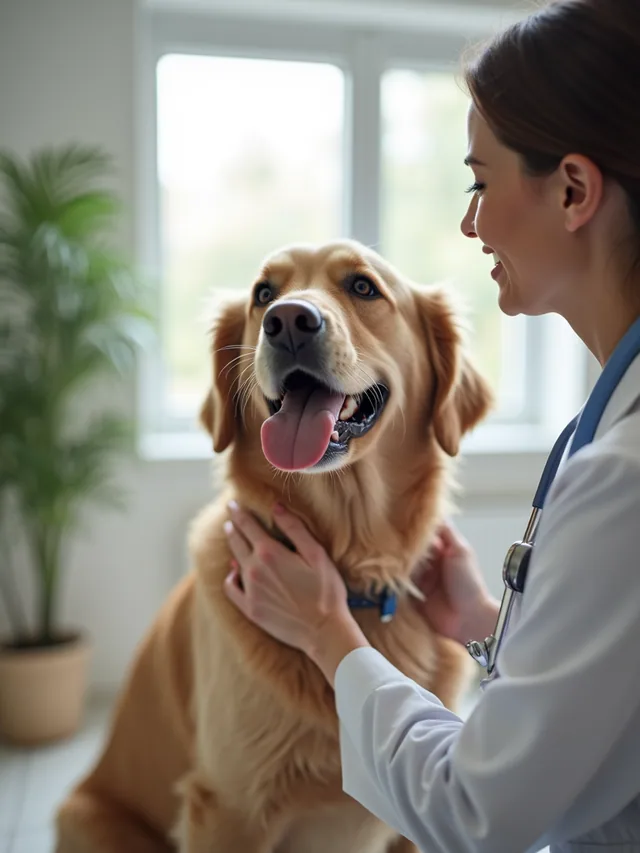




Senior dog vet visits are the simplest thing you can do to add good years — and if your dog is over 7, the once-a-year checkup that served them as a young adult is no longer enough. Dogs age far faster than we do, and in Carrollwood and across Tampa we watch how much can change for an older dog between one summer and the next. At Gregory Veterinary Clinic, twice-a-year senior dog vet visits are where we catch the problems a single annual exam quietly misses.
When is a dog actually senior?
Age is not one-size-fits-all. As a rough guide, most dogs enter their senior years around 7, but size changes the math: a Great Dane can be a senior by 6, while a small terrier may not be until 9 or 10. The AVMA notes that large and giant breeds age faster and reach their senior stage years earlier than small breeds. If your dog is 7 or older — or your large-breed dog is closing on 6 — it is time to think about their care a little differently.
Why senior dogs need vet visits twice a year
The veterinary standard for senior pets is a wellness exam every 6 months, and the math explains why. A single year for an older dog can equal 4 to 5 human years. Waiting a full 12 months between exams is a bit like a person in their 70s seeing the doctor once every 4 or 5 years — a lot can develop in that gap. The AAHA senior care guidelines put the twice-yearly visit at the center of keeping older pets healthy. Two visits a year let us:
Track weight, muscle, and mobility changes before they turn severe
Repeat bloodwork so we compare trends over time, not just 1 snapshot
Stay ahead of fast-moving problems like kidney or dental disease
Catch cognitive and behavior changes early, when they are most manageable
What we check at a senior dog vet visit
A senior visit is more thorough than a young dog's. Beyond the standard exam, we pay close attention to:
Kidney, liver, and thyroid function through bloodwork
Dental disease, which affects the majority of dogs by age 3 and worsens with every year after
Arthritis and joint pain — the majority of dogs over 7 have some degree of osteoarthritis, often hidden behind a slowing down owners write off as old age
New lumps and skin changes
Heart and lung sounds, and any change in breathing or stamina
Much of what we find is treatable, especially early. Arthritis pain can be managed, sometimes with cold laser therapy. Early kidney changes can be slowed with a prescription diet. Dental disease can be resolved with a cleaning. Catching these early often costs a fraction of treating them once they advance — you can see the ongoing-care options on our clinic services page.
Signs to call before the next scheduled visit
Between visits, watch for changes that are easy to dismiss as aging but deserve a look within a week or 2:
Drinking or urinating noticeably more than usual
Trouble with stairs, jumping, or getting up after rest
New stiffness, especially in the first few minutes of the morning
Weight loss, or a bigger appetite without any weight gain
Confusion, pacing at night, or accidents in a house-trained dog
Bad breath, or dropping food while eating
Slowing down is not simply old age. It is often pain or disease we can do something about.
Aging is not a diagnosis
The most useful thing we can tell senior-dog owners: do not accept decline as inevitable. Cold laser therapy for arthritis, a diet change for early kidney disease, a dental cleaning that ends chronic mouth pain — these are the interventions we use at Gregory Veterinary Clinic to give a senior dog good, comfortable years. The earlier we start, the more we can do, and that is the entire case for twice-yearly senior dog vet visits. Book yours on our wellness services page or request an appointment online.
Frequently asked questions
At what age is a dog considered senior?
For most dogs, around 7, but it depends on size. Large and giant breeds age faster and may be seniors by 6; small breeds often not until 9 or 10. Ask us where your specific dog falls.
Does my senior dog really need bloodwork every visit?
For most seniors, bloodwork every 6 months is worth it. Older bodies change quickly, and comparing results over time catches kidney, liver, and thyroid disease long before symptoms show. We tailor the recommendation to your dog.
My old dog seems fine — is a second yearly visit necessary?
Seeming fine is exactly why it helps. Dogs hide discomfort, and the point of a senior check is to find issues while your dog still feels good and treatment is easiest. A healthy visit is a great result, not a wasted one.
If your dog is 7 or older, twice-a-year senior dog vet visits are the simplest way to add good, comfortable years. Call Gregory Veterinary Clinic in Carrollwood at (813) 592-7339 or request an appointment online.