



Internal medicine problems rarely arrive as a single event. They show up as a pattern: a dog who empties the water bowl a little sooner each week, a cat who eats well and still feels lighter, an upset stomach that keeps coming back. Each change is small enough to explain away, which is why these conditions are easy to miss at home.
This post covers what internal medicine means for a pet, the signs that suggest a closer look, what the workup involves step by step, and why it sometimes takes more than one visit to reach an answer.
What does internal medicine cover in a pet?
Internal medicine is the branch of veterinary care that deals with the organs and systems inside the body, and with problems that build slowly and affect more than one part of it. It works out why the body is out of balance, then manages it over time, usually with medication, diet, and monitoring.
Broadly, it covers:
- Hormone conditions, such as Cushing's disease, Addison's disease, diabetes, and thyroid disease
- The stomach and gut, including vomiting, diarrhea, or appetite changes that keep returning
- The kidneys and liver, which can lose function gradually before a pet looks unwell
It is also a veterinary specialty. Veterinarians board-certified in it through the American College of Veterinary Internal Medicine are called internists. A general practice usually handles the first workup and often the ongoing care. At Gregory Veterinary Clinic, our doctors run bloodwork, urinalysis, fecal tests, and cytology in house and take digital X-rays on site. When a case calls for a specialist's input, we work with trusted veterinary specialists in the Tampa Bay area and stay involved in the follow up. Our internal medicine and surgery page shows how those pieces fit together.
What signs suggest a pet needs a closer look?
None of these points to one diagnosis. They are changes worth mentioning, especially when they last more than a couple of weeks or turn up together.
- Drinking and urinating more, or accidents in a pet who has been house-trained for years
- Eating more than usual, or picking at food
- Weight loss while still eating, or a pot-bellied look without a change in diet
- Vomiting or diarrhea that settles and then returns
- A thinning coat, hair loss on both sides of the body, slow healing, or repeat skin and urinary infections
- Panting or restlessness at night
- Energy that drifts lower, or weakness that comes and goes
- A yellow tint to the whites of the eyes or the gums
Several of these look like ordinary aging, which is why they get missed. Some workups start with no symptoms at all, from a kidney value that has crept up since last year or dilute urine on a routine screen.
Sudden or severe signs are different. A pet who collapses, cannot keep water down, strains to urinate with little or nothing coming out, or struggles to breathe is not a wait-and-see situation. Call us at 813-592-7339 straight away, and outside our hours, go to an emergency hospital.
What does an internal medicine workup look like?
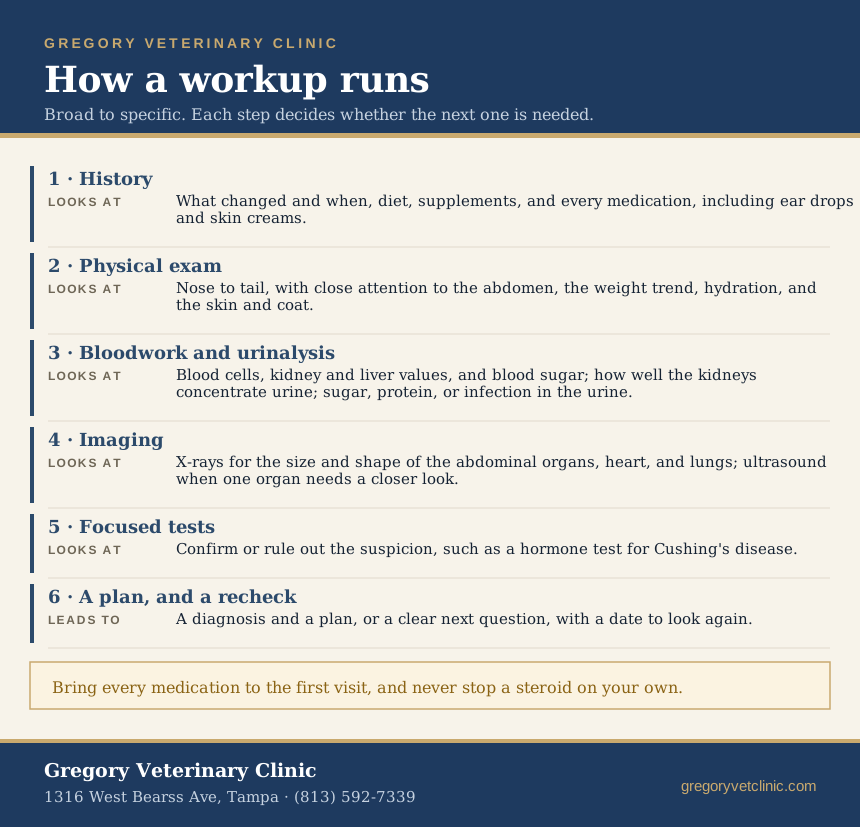
The workup moves from broad to specific, and each step decides whether the next one is needed.
- History. What changed, when it started, and whether it is getting worse, plus diet, supplements, and every medication, including ear drops and skin creams. Thirst that began after a medication change is a different case from thirst out of nowhere.
- Physical exam. The full nose to tail sequence described in what a wellness exam actually checks, with close attention to the abdomen, the weight trend, hydration, and the skin and coat.
- Bloodwork and urinalysis. A complete blood count and chemistry panel show blood cells, kidney and liver values, and blood sugar, with a thyroid level added when relevant. A urinalysis shows how well the kidneys concentrate urine and whether there is sugar, protein, or infection. Fecal tests and cytology are added when the signs call for them. Our guide to what diagnostic tests catch goes deeper on each.
- Imaging. Digital X-rays show the size and shape of the abdominal organs, the heart and lungs, and anything that should not be there, such as a mass or a swallowed object. Ultrasound shows the inside of soft tissue organs when one organ needs a closer look.
- Focused tests. Once the first round points somewhere, specific tests confirm or rule out the suspicion. For Cushing's, that means a hormone test such as an ACTH stimulation test or a low-dose dexamethasone suppression test, some of which compare blood samples taken hours apart.
- A plan, and a recheck. The result is a diagnosis and plan, or a clear next question. Either way, there is a date to look again.
Why does a workup sometimes take more than one visit?
Because each answer shapes the next question, and running every possible test on the first day means more needles and stress for a pet who may not need them all. Other reasons:
- Some tests read best in a stable pet. A separate illness can muddy hormone results, so that problem is sometimes treated first.
- Some results need a second point. One kidney value is a snapshot. The same value a few weeks later shows the direction.
- Some specialized tests go to an outside laboratory and take longer to come back.
- Treatment is monitored. Long-term conditions need periodic recheck testing to adjust medication.
One thing helps: our doctors share one health record for each pet, so whoever you see at a recheck can read the whole story.
A Tampa note: heat, thirst, and long courses of ear and skin medication
Two local realities shape how these cases look in North Tampa and Carrollwood.
The first is heat. Pets drink more through a long Florida summer, so a rise in thirst is easy to blame on the weather. If your pet is still drinking summer amounts as the weather cools, or the extra drinking comes with more urination, mention it. To check at home, put a measured amount in the bowl each morning, measure what is left the next morning, and note it for a few days.
The second is Florida's year round itch season. Some pets spend long stretches on ear or skin medication, and some of those products contain steroids. Long-term steroid use, including drops and creams absorbed through the skin, can cause signs that closely resemble Cushing's disease. Bring every medication to the first visit, and never stop a steroid on your own, since some need to be tapered under a veterinarian's guidance.
Frequently asked questions
What is the difference between a general practice vet and a veterinary internist?A general practice vet cares for pets from vaccines to illness and handles the first workup for internal problems. A veterinary internist has completed residency training and board certification in internal medicine and takes on cases that need specialist management. Your vet decides with you when a referral makes sense.
Is an internal medicine vet the same as an emergency vet?No. Emergency care deals with sudden, severe problems that need immediate treatment. Internal medicine deals with conditions that build over weeks or months and are managed over time. A pet with a chronic condition can still have an emergency, so treat sudden or severe signs as urgent.
Can internal medicine conditions be cured?Some resolve with treatment. Others, such as Cushing's disease and chronic kidney disease, are managed long term rather than cured. With consistent treatment and rechecks, pets with these conditions can stay comfortable.
Do cats need internal medicine workups too?Yes. Cats are good at hiding illness, and weight loss, changes in drinking, or coat changes can be the first signs of kidney disease, thyroid disease, or diabetes. The workup follows the same steps.
Talk to us about what you are seeing
If your pet has been drinking more, losing weight, or just seems not quite right lately, write down what you have noticed and bring it in. We will start with the history and the exam, explain each test before we run it, and tell you plainly what we find. Request an appointment with Gregory Veterinary Clinic or call us at 813-592-7339.