



Halloween is one of our busiest phone weeks, and the calls are never exotic. It is the same short list every year, starting around dinnertime on the 31st and again the next morning after somebody's dog found the leftover bowl. Carrollwood does trick-or-treat properly: doors opening all evening, candy at nose height, and pets who would rather be somewhere quiet. Here is what we see, in rough order of frequency, with the prevention that works and the point where you should call.
Chocolate: the type matters as much as the amount
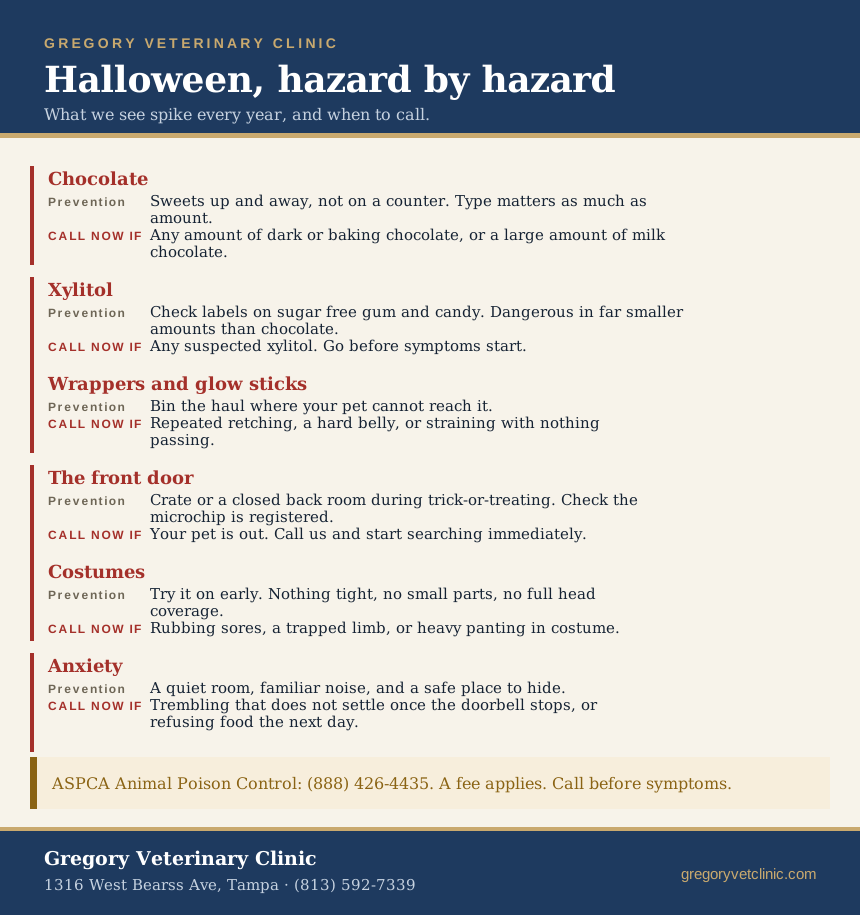
Chocolate is our number one Halloween call, and the first two questions we ask are what kind, and how much does your pet weigh. Theobromine and caffeine are the problem, and the concentration climbs sharply as chocolate gets darker: white chocolate has almost none, milk chocolate a modest amount, and semisweet, dark, and especially baking chocolate several times more per ounce. A fun size milk chocolate bar stolen by a 70 pound Labrador is a very different situation from the same bar in a 9 pound terrier, and a square of baking chocolate can be serious in almost any dog.
Expect vomiting, diarrhea, restlessness, and panting first, then a racing heart, tremors, and sometimes seizures. Signs often take 6 to 12 hours to appear, and dogs clear these compounds slowly.
Prevention: candy lives in a closed cabinet, never in a bowl on the counter or a bucket on the floor.
Call now if: your pet ate any chocolate. Do not wait for symptoms, do not estimate the dose yourself, and never induce vomiting unless we say to. Keep the wrapper so we can see the type and weight.
Xylitol: dangerous in far smaller amounts than chocolate
Xylitol, sometimes labeled birch sugar, worries us more than chocolate does. It turns up in sugar free gum, candy, and mints, in some peanut butters, and in baked goods. In dogs it triggers a rapid insulin release, blood sugar can crash within an hour, and higher doses cause liver injury.
The dangerous dose is far smaller than with chocolate: a piece or two of gum in a small dog, not a bag of candy. Watch for weakness, wobbliness, vomiting, collapse, and seizures.
Prevention: treat the purse and the gum pack like the candy bowl, and read the label on anything sugar free, including the peanut butter you hide pills in.
Call now if: your dog got into anything sugar free. Call while you are still reading the label.
Wrappers, lollipop sticks, and glow sticks
Foil, cellophane, lollipop sticks, and glow stick casings either pass the hard way or not at all. Cats and small dogs obstruct most often, and obstructions mean surgery.
Glow sticks deserve their own note: a cat bites one and you get frantic drooling, foaming, and head shaking. The liquid is more irritating than poisonous, so offer a little food to clear the taste and wipe residue off the coat. The swallowed casing causes the real trouble.
Prevention: empty the candy bowl and the trash before bed, and keep glow sticks and glow jewelry out of reach.
Call now if: there is repeated vomiting, refusal to eat, a painful belly, or you know a wrapper or stick went down.
The front door: the escape nobody plans for
A door that opens forty times in two hours eventually stays open five seconds too long, and a startled pet is gone before anyone notices. Some turn up two streets over, some not for days, and the traffic on Dale Mabry and Gunn makes that a real risk.
Prevention: put pets in a back bedroom with the door closed, a fan for cover noise, and something to chew. Collars and tags stay on indoors, and your microchip registration needs your current number. Our post on preventing lost pets has the ID basics.
Call now if: your pet is missing. Tell us and the nearby clinics right away so everyone is watching for them.
Costumes: rubbing, trapped limbs, and Florida heat
Some pets enjoy dressing up and plenty do not. The injuries are small but avoidable: skin rubbed raw under a strap, an elastic band left on a leg long enough to cut off circulation, a scratched eye from a slipped mask, or pieces chewed off and swallowed. Then there is the weather. Late October in Tampa still runs warm, and a costume is one more layer on an animal that cools itself by panting. Flat faced breeds have the least margin, and our guide to heatstroke in Florida pets lists the warning signs.
Prevention: fit the costume days early. It should clear the eyes, ears, mouth, and rear end, with nothing dangling to chew, and it comes off when you stop watching.
Call now if: the skin below a band is swollen, cold, or discolored, an eye is squinting, or your pet is panting hard, unsteady, or red in the gums.
Anxious pets: the stress reaction that shows up later
Doorbells, masks, and shrieking on the sidewalk add up. Anxious pets hide, pace, pant, drool, tremble, refuse food, or have accidents indoors, and some of that surfaces the next day rather than that evening. Pets who struggle with thunderstorms struggle here too, and our Fourth of July safety post covers the same groundwork.
Prevention: set up the quiet room before the first knock, feed dinner early, and let your pet settle before the traffic starts. If your pet has a real noise phobia, talk to us weeks beforehand. Never give a human sedative or another pet's medication.
Call now if: your pet will not settle for hours, will not eat the next day, or injures themselves trying to get out of a crate or door.
Have this ready before October 31
- Our number, plus an emergency veterinary hospital for after we close
- The ASPCA Animal Poison Control Center at (888) 426-4435, which charges a fee
- Your pet's current weight, since every toxicity question starts there
Frequently asked questions
How much chocolate is too much for a dog?
There is no single number. It depends on the type and your dog's weight, and dark or baking chocolate is far more concentrated than milk. Call us with the wrapper in hand.
Should I make my dog vomit at home?
Not unless a veterinarian tells you to. Hydrogen peroxide can injure the stomach, it is not safe in cats, and it is wrong for sharp objects, an unsteady pet, or anything already absorbed.
My dog seems fine an hour later. Can I wait and watch?
No. Chocolate signs commonly take 6 to 12 hours to appear, and xylitol can crash blood sugar before anything looks wrong.
Do I call you or an emergency hospital?
Call our office during our open hours. After we have closed, call a local emergency veterinary hospital, then let us know so we can follow up. For complex cases we coordinate referrals to trusted veterinary specialists.
If your pet needs a checkup, a microchip, or a calming plan before Halloween, call Gregory Veterinary Clinic in Carrollwood at (813) 592-7339 or request an appointment online.