



An older dog usually lets you know when something hurts. An older cat tends to work around it. They stop jumping onto the bed and start sleeping on the rug. They drink a little more, eat a little less, and groom only the parts that are easy to reach. Each change is small enough to file under "just getting old", which is why so many come to light late.
The American Association of Feline Practitioners (AAFP) says as much in its senior care guidelines: a cat's ability to hide ailments makes regular exams more important as cats age. November is Adopt a Senior Pet Month, observed by the ASPCA and by shelters across the country. Whether your older cat grew up with you or came home last week, here are the quiet changes worth a visit, what each can point to, and what a senior visit adds.
Drinking more, and fuller litter boxes
The water bowl empties faster. Your cat drinks from the tap or the shower floor. The litter box clumps get bigger, or there are more of them.
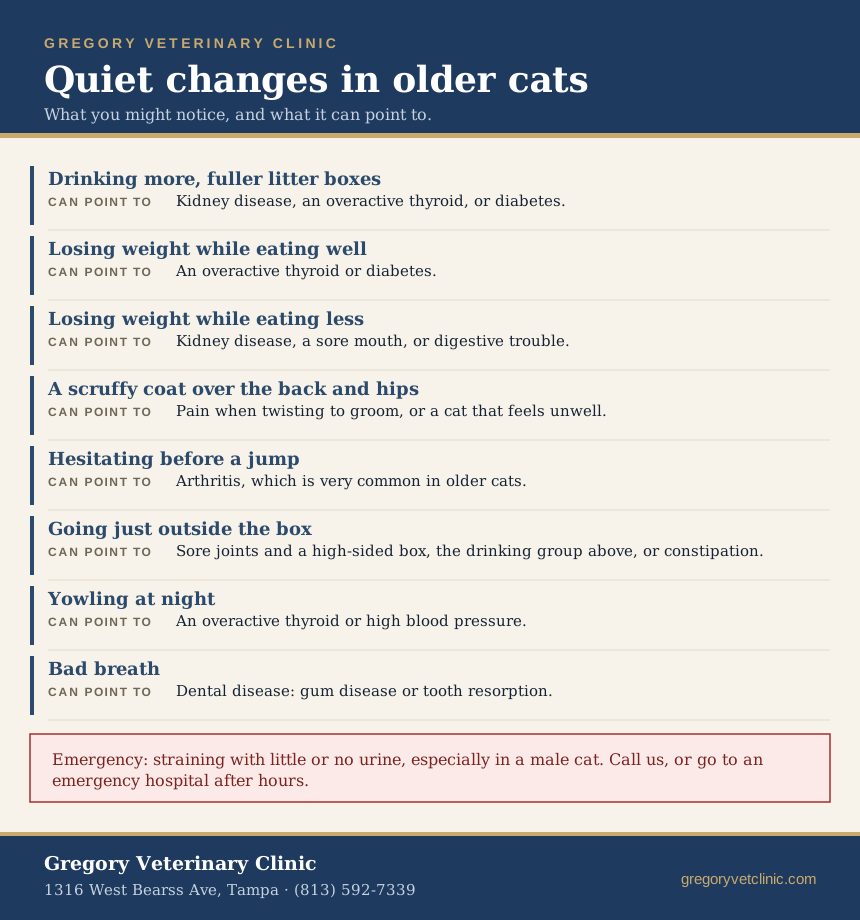
These are classic signs of three conditions common in older cats: kidney disease, an overactive thyroid (hyperthyroidism), and diabetes. All three show up on blood and urine tests, sometimes before the cat looks sick.
In a Tampa summer it is easy to blame an emptier bowl on the heat. For an indoor cat living in air conditioning, a steady rise in drinking is worth mentioning to us in any month.
Weight loss, or a change in appetite
Weight loss is hard to see in a cat you look at every day. You are more likely to feel a sharper spine or hip bones under your hand.
The pattern helps. Losing weight while eating well, or eating more, points toward an overactive thyroid or diabetes. Losing weight while eating less can come from kidney disease, a sore mouth, or digestive trouble. The AAFP suggests weighing your cat at home on a baby scale and telling your veterinarian about any change.
Grooming less, or a scruffy coat
An unkempt coat is information. Watch for mats or a greasy, flaky patch along the lower back, hips, and base of the tail, the places that take a twist to reach. When twisting hurts, those spots go first. A cat that feels unwell for any reason may also stop grooming.
Two smaller tells: thick, overlong nails, which the AAFP lists among the signs of joint pain, and a thin patch from licking one spot, which can point to pain underneath.
Hesitating before a jump
Cats with arthritis rarely limp. They change how they get up and down instead. The AAFP's list of signs includes using a chair as a halfway step to the counter, sliding down the side of the sofa instead of jumping off, and giving up on high places. Arthritis is very common in older cats and easily mistaken for normal aging.
One easy thing to do now: take a short phone video of your cat jumping onto their favorite spot. If something changes later, you will both have a comparison.
Changes in the litter box
Going just outside the box is worth reading as a sign, not bad behavior. A high-sided box can hurt to climb into with sore joints. More urine than usual points back to the kidney, thyroid, and diabetes group above. Hard, dry stool or long straining can mean constipation, which is common in older cats.
One change is an emergency: straining with little or no urine coming out, especially in a male cat. Call us during clinic hours, or go straight to an emergency hospital after hours. Our guide to after-hours decisions covers the rest of that list.
Hiding, or a change in mood
A cat that used to meet you at the door and now spends the afternoon under the bed is telling you something. So is one that suddenly objects to being picked up, or flinches when you stroke one part of the back. The AAFP lists changes like these among the signs of pain.
More vocal at night
Yowling at night, often with restless pacing, can have a medical cause. Cornell University's Feline Health Center notes that night-time vocalizing is relatively common in cats with an overactive thyroid or high blood pressure. High blood pressure in cats usually comes alongside another condition, such as kidney or thyroid disease, and untreated it can damage the eyes, heart, brain, and kidneys. Age-related changes in the brain, similar to dementia in people, come into the picture once medical causes are ruled out.
Bad breath
Bad breath is not a normal part of aging in cats. It most often means dental disease, either gum disease or tooth resorption, a painful condition common in cats in which the tooth structure breaks down. Many cats with sore mouths keep eating, so watch for chewing on one side, dropping food, or a new preference for soft food.
What a senior visit adds
A senior visit starts with the nose to tail exam we described in what a wellness exam actually checks. For older cats, the AAFP guidelines add:
- Bloodwork for kidney and liver values, blood sugar, blood cell counts, and the thyroid level.
- A urine test, which shows how well the kidneys concentrate urine and picks up sugar, protein, or signs of infection.
- A blood pressure reading, which the AAFP recommends at every exam for older cats.
- Weight and muscle condition, scored each visit so small trends show.
- A closer look at the teeth and joints.
Our doctors share one health record, so whoever sees your cat can compare today's results with the last visit and catch a kidney value creeping up while it is still small.
The AAFP recommends checkups twice a year for older cats, for the same reasons we gave for twice-yearly visits for senior dogs. For the visit itself, see what to expect at a cat wellness exam.
Small changes at home that help
- A lower litter box. A box with one low side, or a storage tub with a low entry cut in, is easier on sore hips.
- Steps or a ramp up to the bed, the sofa, or a favorite window perch.
- Water in more than one place, in wide, shallow bowls. The AAFP notes that hydration matters a great deal for older cats.
- Night lights along the route to the litter box.
- A soft brush over the back and hips your cat can no longer reach.
None of these replaces a visit to find out what is behind a change.
Frequently asked questions
My older cat is drinking a lot more water. What could it be?
Common causes in older cats include kidney disease, an overactive thyroid, and diabetes. Blood and urine tests tell them apart, so book a visit rather than waiting to see whether it settles.
How often should an older cat see the vet?
The American Association of Feline Practitioners recommends checkups twice a year for older cats, and more often for the oldest cats or those with ongoing health conditions. We will suggest a schedule once we have seen your cat's exam and bloodwork.
Is it arthritis or just old age?
Jumping in stages, sliding down instead of jumping off, and skipping favorite high spots are classic arthritis signs. An exam of the joints and how your cat moves tells the two apart.
Can an older cat still have dental work under anesthesia?
Age alone does not rule it out. The AAFP's senior care guidelines say advancing age should not be a limiting factor in dental care under anesthesia. We look at the exam and bloodwork first, then plan the anesthesia around what we find.
Book a senior visit for your cat
If any of these changes sound familiar, note what you have seen and roughly when it started, and bring any videos. Then request an appointment or call 813-592-7339. Gregory Veterinary Clinic has cared for Carrollwood's cats and dogs since 1985, and we will tell you plainly what we find.