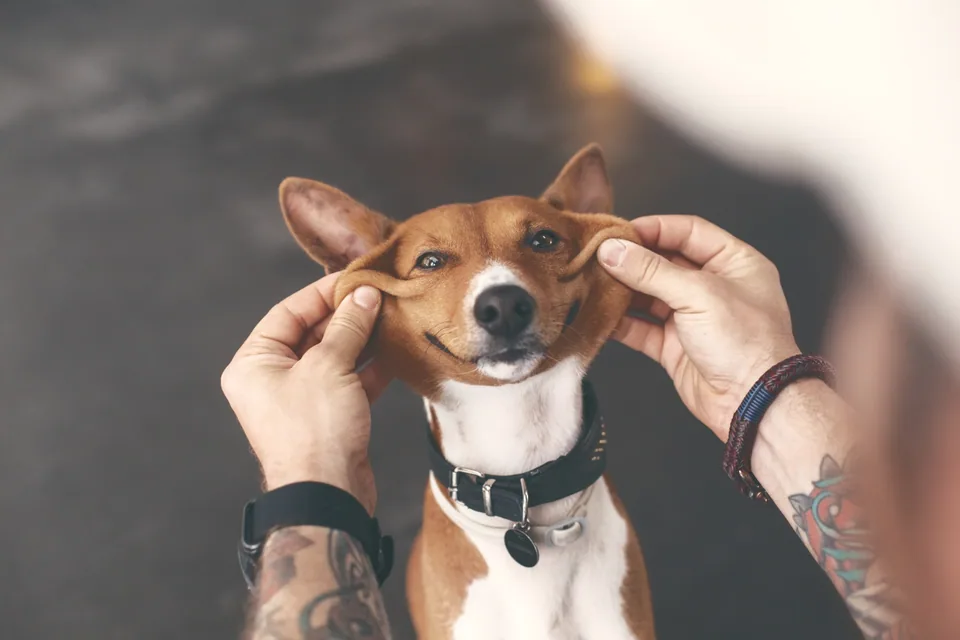




From the owner's side of the table, a wellness exam can look like a few minutes of fussing over your dog. Hands run along the jaw. A light passes across the eyes. A stethoscope moves to one spot, then another, then back. It reads as informal, and that is partly the point, because a calm patient gives a more accurate exam.
What is actually happening is a fixed sequence. The veterinarian works through the body one system at a time, in the same order every visit, comparing each finding against what is normal for that species, breed, and animal. October is National Pet Wellness Month, so here is that sequence. Most of what it turns up is something you could not have spotted at home, because the findings that matter are small. A slightly off rhythm. A kidney firmer than last year. Two pounds.
Eyes
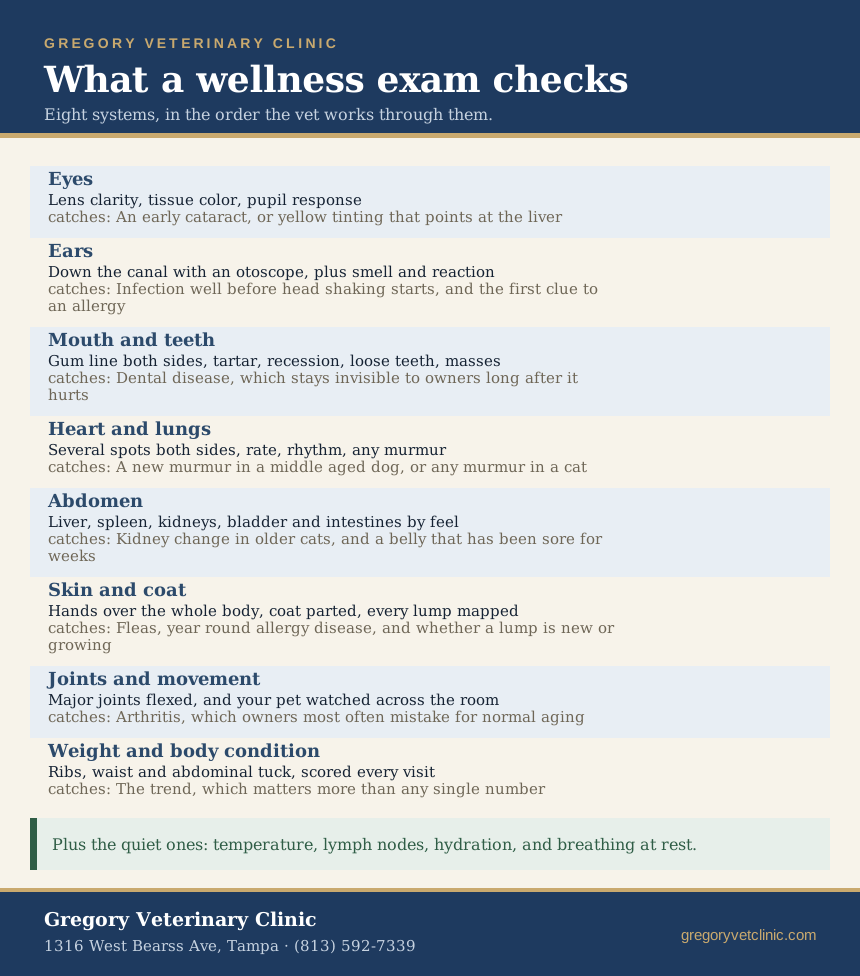
We check the clarity of the lens, the color and moisture of the surrounding tissue, and how the pupils respond to light.
Cloudiness in an older pet is often ordinary age related change, but it can also be an early cataract, and in a diabetic pet cataracts develop fast. Yellow tinting in the whites points toward the liver. Pale tissue inside the eyelid can be an early sign of anemia.
Ears
We look down the canal with an otoscope and check the ear flap, the smell, and how your pet reacts to having the ear handled.
In the Tampa humidity, ear infections are one of the most common things we treat, and they usually start well before a pet begins shaking their head. Chronic low grade inflammation is also one of the clearest signals of an underlying allergy, often the first clue in a skin problem that has not fully surfaced.
Mouth and teeth
We lift the lips and check the gum line on both sides for tartar, recession, fractured or loose teeth, masses under the tongue, and gum color.
This is the highest yield part of the exam for most patients. Dental disease is extremely common in adult dogs and cats, and it stays invisible to owners long after it hurts. Recession and bone loss do not reverse, so finding it at year three instead of year five is often the difference between a cleaning and extractions.
Heart and lungs
The stethoscope work takes longer than it looks. We listen at several spots on both sides of the chest, count the rate, grade any murmur, check the rhythm, then move to the lungs.
A new murmur in a middle aged dog, or any murmur in a cat, matters and is completely silent to an owner. Most pets with early heart disease act normal. Catching a murmur while your pet is comfortable lets us image the heart, set a baseline, and monitor, instead of meeting the problem during a breathing crisis.
Abdomen
We palpate the belly with both hands, working through the organs by feel: liver, spleen, kidneys, bladder, intestines.
Kidney size and texture change with chronic kidney disease, one of the most common conditions in older cats, and that change often shows on the exam table before an owner notices increased drinking. Palpation also tells us whether the belly hurts; a pet guarding a sore abdomen for weeks gives it away with one flinch.
Skin and coat
We run hands over the whole body, part the coat in several places, check for fleas and flea dirt, and map any lump.
Florida gives us a year round flea and allergy season, so skin is rarely a quiet system here. The mapping matters more than any single lump. A mass that has not changed in two years and one that has doubled since spring get handled very differently, and that comparison only exists if someone wrote it down last visit.
Joints and movement
We flex and extend the major joints, feel for thickening or grinding, and watch your pet move across the room.
Arthritis is the condition owners most often mistake for normal aging. Dogs who stop taking the stairs and cats who stop jumping onto the counter are usually not slowing down by choice. Joint pain is manageable when caught while a pet is still active, and much harder to turn around once muscle has wasted around the sore limb.
Weight and body condition
Every visit starts with a weight, and we score body condition by feeling for the ribs, the waist, and the abdominal tuck.
The number alone is not the finding. The trend is. A cat quietly dropping weight across two visits can be an early sign of hyperthyroidism, diabetes, or kidney disease, nearly impossible to see in an animal you look at daily. Steady gain does its damage more slowly, and it makes every joint problem worse.
The checks you probably do not notice
A temperature. A check of the lymph nodes under the jaw and behind the knees. A pinch of skin for hydration, and a look at how your pet breathes before anyone touches them. Enlarged lymph nodes are a finding no owner is likely to catch, and they change what we do next.
For the practical side of the appointment, how often to come in and what to bring, we covered that in what to expect at a pet wellness exam in Carrollwood.
What happens when something turns up
Most findings are handled in house: bloodwork, a dental plan, a diet change, medication, or a note to recheck in six months. When a case calls for care beyond general practice, we refer to trusted veterinary specialists in the Tampa Bay area and stay involved in the follow up.
Frequently asked questions
How long does a pet wellness exam take?
Plan on 20 to 30 minutes. The hands on physical exam runs about 10 to 15 minutes, with the rest spent on history, your questions, any vaccines or testing due, and whatever the exam turned up.
What can a physical exam find without bloodwork?
Heart murmurs, dental disease, ear infections, skin masses, enlarged lymph nodes, joint pain, abnormal organ size, eye changes, and weight trends. Bloodwork then confirms and measures what the exam suggests.
Is a wellness exam different for cats and dogs?
The sequence is the same, the priorities differ. In cats we watch kidneys, thyroid, weight trend, and heart, since feline heart disease is often silent. In dogs we spend more time on joints, skin, and teeth.
My pet seems perfectly healthy. Is the exam still worth it?
That is the visit that produces the most useful information. A healthy exam sets the baseline every future comparison depends on, and a good share of early findings come from pets whose owners had no concerns at all.
Book your pet's wellness exam
If your pet is due, or you are not sure when the last full exam was, this is a good month to get it on the calendar. Request an appointment with Gregory Veterinary Clinic in Carrollwood and we will take your pet through the whole sequence, then tell you plainly what we found.