



Thanksgiving trouble for pets is rarely exotic. It is a plate left on the coffee table during the game, a guest slipping the dog some turkey skin, a carcass in the kitchen trash. Some of it shows up that evening. Pancreatitis may not look like a problem until Friday or Saturday.
Here are the foods to keep off the floor, the signs of pancreatitis, what to do if your pet gets into something, and rules for guests.
Rich, fatty food: turkey skin, drippings, and gravy
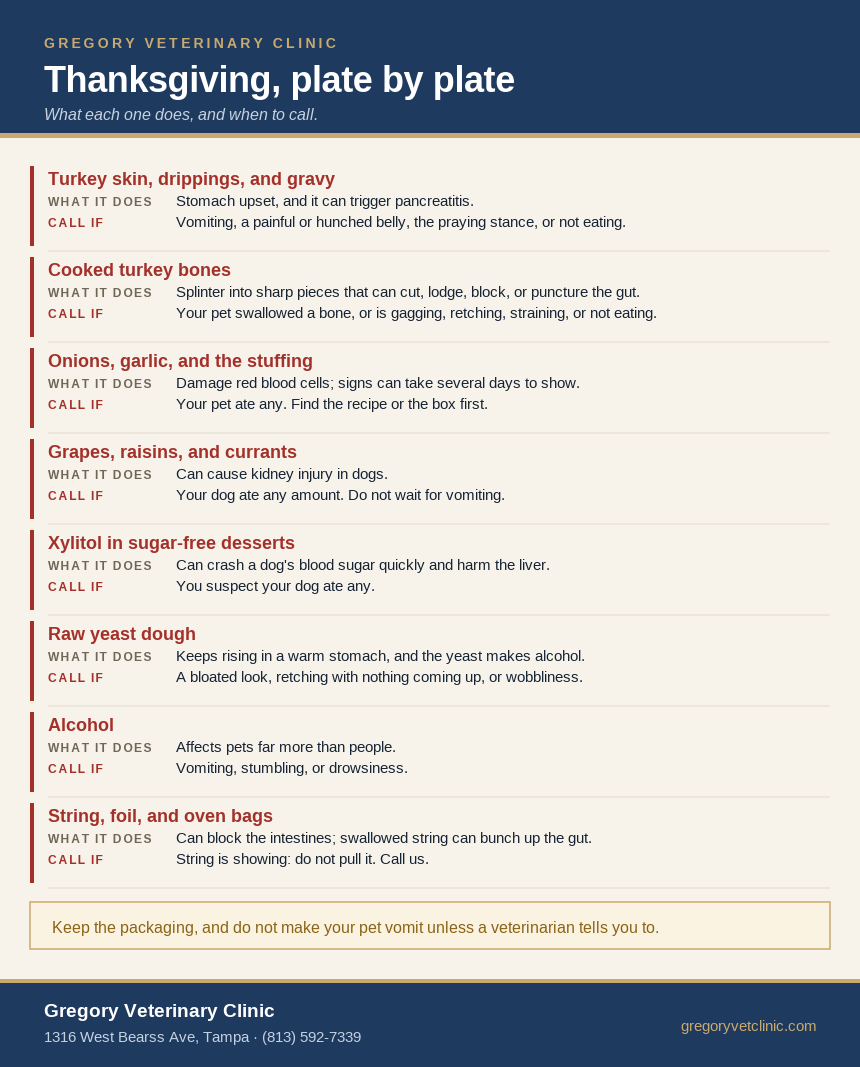
The easiest Thanksgiving risk to underestimate is not a poison. It is fat. Turkey skin, pan drippings, gravy, and buttery sides are a sudden, heavy load for a pet used to the same food every day. At the mild end that means vomiting and diarrhea. At the serious end it can trigger pancreatitis, an inflammation of the pancreas that can make a pet very sick.
Dogs who have had pancreatitis before, overweight dogs, and some breeds, miniature schnauzers among them, seem more prone. The kindest holiday plate for your pet is their own food.
The signs of pancreatitis in dogs
- Vomiting, often more than once, sometimes with diarrhea
- A painful belly. Your dog may flinch or cry when lifted or touched around the middle
- A hunched back, or the "praying" stance. Front legs and chest down, back end up, held like a stretch that goes on too long. It takes pressure off a sore belly
- Not eating, even a favorite treat
- Lethargy or restlessness. Unusually quiet, unwilling to get up, or unable to settle
Signs can start within hours of the meal or a day or two later, and they range from mild to life threatening. They overlap with other problems, a swallowed bone among them, and only an exam and tests can tell them apart. Please do not wait to see whether it passes.
Cats show it differently
Cats get pancreatitis too, but many simply stop eating, hide, and seem flat, with little or no vomiting. A cat who skips meals over the holiday weekend needs a call, not a wait.
Cooked turkey bones
Cooked bones are brittle. Turkey bones splinter into sharp pieces that can cut the mouth, lodge in the throat or stomach, or block or puncture the intestines. Bones and carcass go into a sealed bag and out to the outdoor bin.
Call us if: your pet swallowed a bone, or is gagging, retching, straining, or not eating afterward.
Onions, garlic, and the stuffing
Onions, garlic, leeks, and chives damage red blood cells in dogs and cats, and cats are more sensitive. Cooked, powdered, and dried forms all count, which puts them in stuffing, gravy, seasoned turkey, and the crispy onions on the green bean casserole. Anemia can take several days to show, as weakness, pale gums, or dark urine, so a pet who seems fine Thursday night is not in the clear.
Grapes and raisins
Grapes, raisins, and currants can cause kidney injury in dogs, and nobody can predict which dog will react or to how much. Watch the stuffing, rolls, and desserts. If your dog ate any amount, call. Do not wait for vomiting.
Desserts, dough, and drinks
- Xylitol, sometimes listed as birch sugar, turns up in sugar free desserts and some peanut butters. In dogs it can crash blood sugar quickly and harm the liver.
- Chocolate gets more dangerous the darker it is. Our Halloween safety post covers chocolate and xylitol in detail.
- Raw yeast dough keeps rising in a warm stomach, and the yeast makes alcohol. A dog who ate rising rolls can look bloated, retch without bringing anything up, and turn wobbly.
- Alcohol affects pets far more than people. An unattended drink or a rum soaked dessert can cause vomiting, stumbling, and drowsiness.
String, foil, and anything that smells like turkey
Trussing string, foil, oven bags, the pop up timer, and the absorbent pad under the raw bird all smell wonderful and can block the intestines. String is the most dangerous, especially for cats: a swallowed piece can anchor at one end and bunch up the gut. If you see string hanging from your pet's mouth or rear end, do not pull it. Call us.
What to do if your pet gets into something
- Move your pet away and clear up what is left.
- Keep the packaging or the recipe. "Stuffing" can mean onions, raisins, both, or neither.
- Note roughly how much and when, and have your pet's current weight handy.
- Call us at 813-592-7339 before symptoms start. Earlier is easier.
- Do not make your pet vomit unless a veterinarian tells you to, and skip home treatments. Bones and string can do more damage coming back up.
Outside our open hours, our guide to after hours decisions sets out what means go now. A suspected toxin does. The ASPCA Animal Poison Control Center is another resource for poison questions.
House rules for Thanksgiving guests
Plenty of holiday trouble starts with a kind gesture. Brief guests at the door:
- No feeding the pets. Leave out their own treats instead.
- Plates stay on the table, never on the couch or the floor.
- Drinks and desserts stay up high.
- Children too: they are often the most generous feeders at the table.
- At the busiest hour, pets rest in a quiet room with water and something to chew.
A Tampa Thanksgiving happens half outdoors
Late November in Carrollwood is usually mild, so the day spills onto the lanai and the driveway. That adds the drip tray under the smoker, a pot of fryer oil cooling by the garage, dropped bones in the grass, and a back door open all afternoon. Fryer oil is dangerously hot while it cooks and pure fat once it cools, so keep pets away from setup to cleanup. Our post on preventing lost pets covers tags and microchips.
Frequently asked questions
Can I give my dog a little turkey on Thanksgiving?
The safest answer is to skip it. Skin, drippings, gravy, and seasoned meat can trigger stomach upset or pancreatitis. Offer your dog's usual treats instead.
How long after eating fatty food do signs of pancreatitis appear?
It varies. Some dogs vomit within hours; others seem fine for a day or two. Keep watching through the weekend, and call at the first sign.
My dog ate stuffing but seems fine. Do I need to call?
Yes. Stuffing often contains onion, garlic, or raisins, and the effects can be delayed by days. Find the recipe or the box, then call us.
What is the difference between pancreatitis and a blockage?
Both can cause vomiting, a painful belly, and refusal to eat. A blockage usually follows a swallowed bone, string, or wrapper. Telling them apart takes an exam and tests, so both mean a call rather than a wait.
The short version
- Turkey skin, drippings, and gravy are the easiest risk to miss, and a common trigger for pancreatitis.
- Pancreatitis in dogs: vomiting, a painful or hunched belly, the praying stance, not eating, lethargy. In cats, often just not eating and hiding.
- Bones, onions and garlic, grapes and raisins, xylitol, chocolate, raw dough, alcohol, and string all mean a call.
- Keep the packaging, never induce vomiting without advice, and never pull string.
If your pet has had pancreatitis before or you want a plan before the holiday, call Gregory Veterinary Clinic in Carrollwood at 813-592-7339 or request an appointment online. Happy Thanksgiving from all of us.