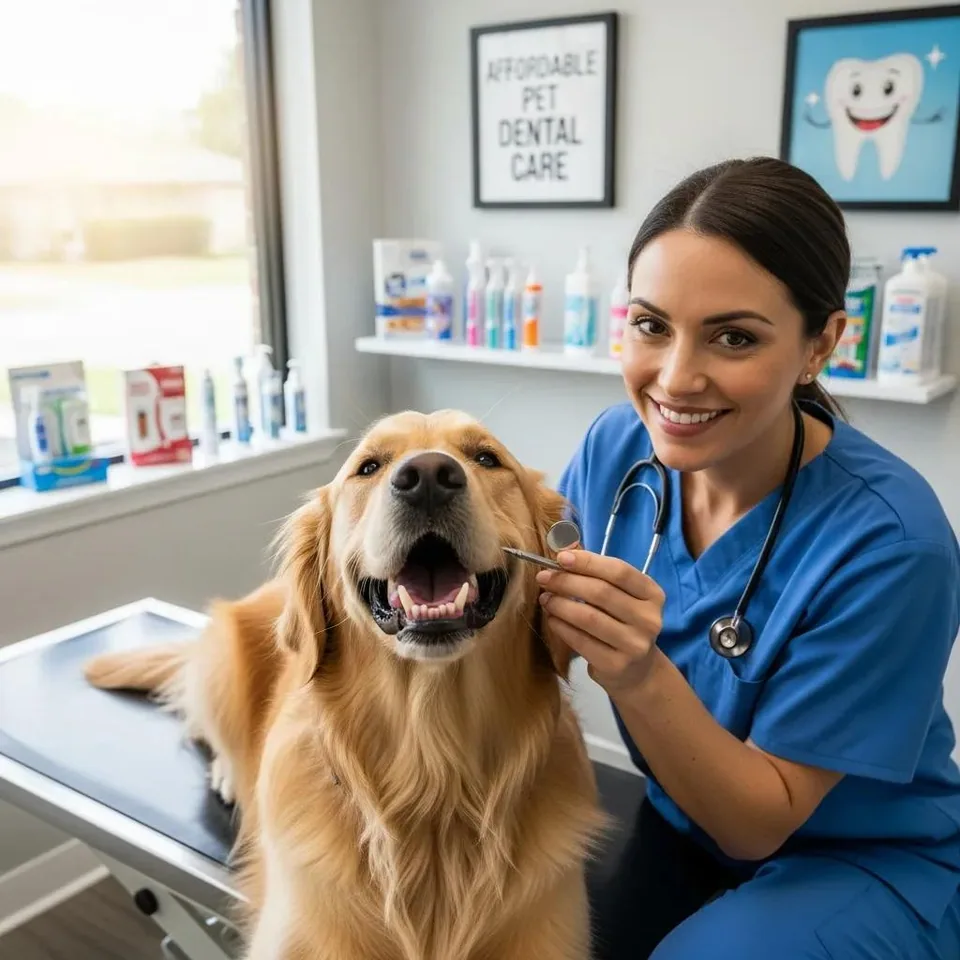




Owners who agree to a dental cleaning almost always want to know two things first: what we are actually going to do to their pet all day, and what the bill will look like. Here is the whole day from drop off to discharge, and an honest account of what moves the cost up or down.
What actually happens during a pet dental cleaning
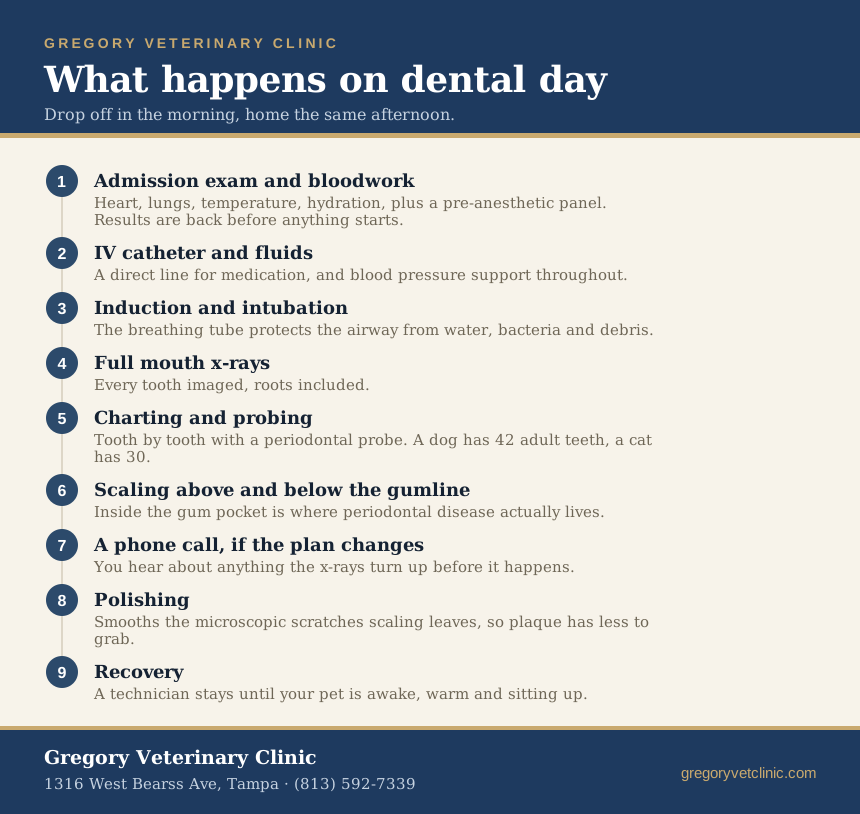
A professional cleaning is an anesthetic procedure, not a quick scrub in the exam room. Pets are dropped off in the morning and go home the same afternoon.
- Admission exam and bloodwork. Heart, lungs, temperature, hydration, plus a pre-anesthetic blood panel covering kidney and liver values, red cell count, and blood sugar. Results are back before anything else starts.
- IV catheter and fluids. A direct line for medications, and support for blood pressure throughout.
- Induction and intubation. A breathing tube protects the airway from the water, bacteria, and debris that come loose during cleaning.
- Full mouth dental x-rays. Every tooth is imaged, roots included.
- Charting and probing. We walk the mouth tooth by tooth with a periodontal probe, recording pocket depths, mobility, fractures, and resorptive lesions. A dog has 42 adult teeth and a cat has 30, so this takes longer than owners expect.
- Scaling above and below the gumline. Ultrasonic and hand instruments clear tartar from the crown, then from inside the gum pocket, where periodontal disease actually lives.
- A phone call, if the plan changes. When the x-rays or charting turn up something new, you hear about it first.
- Polishing. Scaling leaves microscopic scratches; polishing smooths them so plaque has less to grab.
- Recovery. A technician stays with your pet until they are awake, warm, and sitting up.
Why anesthesia is part of every real cleaning
Nothing below the gumline can be cleaned, probed, or x-rayed on an awake animal. A tolerant dog might let someone chip visible tartar off the outer surfaces, and the mouth photographs beautifully afterward, but the disease that causes pain and tooth loss was never touched. Our guide to professional teeth cleaning in Tampa walks through how we screen patients beforehand.
Protocols are built per patient. Dosing follows the bloodwork, and heart rate, blood pressure, oxygen saturation, and temperature are monitored continuously. Age by itself is not a disqualifier: untreated infection in the mouth of a 12 year old cat usually carries more risk than a well planned anesthetic does.
Why we x-ray every tooth, not just the obvious ones
This is the step owners most often ask to skip, and the one we push back on hardest. Two studies published in the American Journal of Veterinary Research in 1998 by Verstraete and colleagues examined pets whose oral exams looked completely normal. Full mouth radiographs found clinically important disease in roughly 28 percent of the dogs and 42 percent of the cats. In pets that already showed visible problems, they turned up additional findings in about half of cases.
Cats are the clearest case: resorptive lesions break down tooth structure at or below the gumline, they are painful, they are invisible from above, and a cat will keep eating right through one.
What a pet dental cleaning costs in Tampa, and what moves the number
A dental is quoted per pet, not off a price list, and the spread between two pets at the same practice is wider than most owners expect. A young cat with clean x-rays and no extractions sits at the bottom of the range. A senior small breed dog who needs eight teeth out, nerve blocks, and a longer anesthetic sits well above it, often at several times the cost. That is why we give you a written estimate after the oral exam rather than a number over the phone.
What a quote should always include is the safety work: pre-anesthetic bloodwork, anesthesia and monitoring, IV fluids, full mouth x-rays, scaling below the gumline, polishing, and recovery. If one estimate is much lower than another, check that list before you compare them, because the gap is usually something missing from it.
What decides where a given pet lands:
- Body weight. Drugs and monitoring time scale with size. A 90 pound retriever costs more to keep safely asleep than an 11 pound terrier.
- How long the mouth takes. A mouth caught early may need 45 minutes. Years of accumulated tartar and inflamed pockets can mean two hours or more of instrument time.
- Extractions. The single largest variable. A loose incisor takes minutes. A fractured carnassial with three roots needs a surgical flap, sectioning, bone removal, and sutures.
- Nerve blocks and pain control. Any patient losing teeth gets local anesthetic blocks and goes home with pain medication.
- Age and health status. Extra pre-anesthetic testing for a senior pet, or one with heart or kidney disease, adds to the workup.
Because so much is decided once your pet is asleep, you get a written estimate with a low end and a high end beforehand, and a call from the treatment area before anything pushes toward the high end. Nobody should learn about extractions at checkout.
On referral: our team is trained in advanced surgical techniques and handles the large majority of extractions in house. Complex cases such as jaw fracture repair, root canal therapy, or an oral mass needing reconstruction are referred to trusted veterinary specialists.
The first 48 hours at home
Most pets are groggy the evening of the procedure and themselves again the next day. If teeth came out, plan on soft food for 10 to 14 days, no hard chews or tug toys while the gums heal, and pain medication on schedule. A little blood tinged drool on day one is expected. Swelling, a dropped appetite past 24 hours, or a suture line that opens is worth a phone call.
What Carrollwood and North Tampa owners can do between cleanings
Gregory Veterinary Clinic has been a family owned practice on West Bearss Avenue since 1985, and we see a lot of small breed dogs across Carrollwood, Northdale, Lutz, and Town 'n' Country. Small breeds crowd 42 teeth into a short jaw, which traps plaque and pushes many of them toward yearly cleanings while a large breed dog may go two or three years.
Brushing between visits is still what works, and 30 seconds per side three times a week beats a perfect routine you abandon in a month. Chews and additives carrying the Veterinary Oral Health Council seal have been tested to reduce plaque or tartar, a more reliable filter than packaging claims.
Frequently asked questions
How long does a pet dental cleaning take?Plan on a full day, roughly 7:30 in the morning to mid afternoon. The anesthetic portion runs one to two hours depending on what the x-rays show.
Can my pet eat before the appointment?No food after dinner the night before. Water is usually fine until you leave the house, and we confirm the specifics when we schedule.
Does pet insurance cover dental cleanings?Some wellness plans cover routine cleanings, and most accident and illness policies cover extractions tied to disease or a fractured tooth. Check your policy ahead of time; we will document whatever the insurer needs.
How often will my pet need this?It depends on size, breed, and what we find. Many small breed dogs and cats do best on a yearly schedule; some large breed dogs stretch further. We flag what we see at every wellness exam.
If your pet's breath has changed, or a cleaning has been on your list a while, request an appointment. We start with an oral exam and a written estimate before anything is scheduled.