



Diabetes rarely announces itself. It starts with a water bowl that needs filling more often, a litter box with bigger clumps, a dog asking out in the middle of the night. Each is easy to explain away, and in Tampa, where pets drink more for half the year anyway, they usually are.
November is National Pet Diabetes Month, as Virginia Tech's veterinary teaching hospital reminds owners. Here is what to watch for at home, how dogs and cats differ, how it is confirmed, and why timing matters.
What diabetes does inside a pet
Insulin is the hormone that lets cells take sugar out of the blood and burn it for fuel. In a diabetic pet, the body either stops making enough insulin or stops responding to it.
Two things follow. Sugar builds up in the blood and spills into the urine, pulling water with it. And the cells, short of fuel, start breaking down fat and muscle. Nearly every early sign traces back to one of those two problems.
The early signs you can spot at home
Drinking and peeing more
Usually the first thing owners notice. A dog asks out more or has accidents. A cat leaves larger or more frequent clumps, or goes outside the box.
Getting thinner while eating well
The combination is the tell. A pet eating as much as ever, or more, while losing weight. Run your hands along the spine and hips; muscle loss over the back often shows there first.
Less energy
More sleeping, less interest in walks or play. In an older pet this gets put down to age.
In dogs: eyes that turn cloudy
Cataracts are common in dogs whose diabetes is not well controlled, and they can appear quickly. Eyes that go cloudy over a short stretch should be checked soon.
In cats: grooming changes and walking on the hocks
A diabetic cat may groom less, leaving the coat dull or unkempt. Less often, a cat whose diabetes has gone uncontrolled for a while walks with the hocks (the joint that looks like a backward knee) low or touching the ground. It comes from nerve changes, is usually painless, and often improves with treatment. It is a later sign, but distinctive.
How diabetes differs in dogs and cats
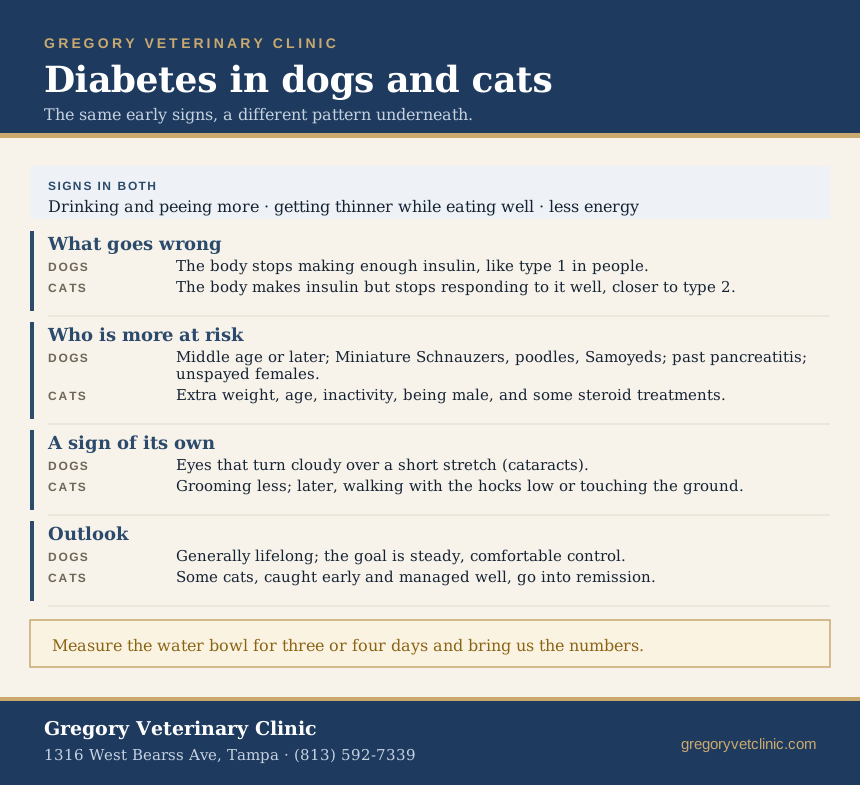
In dogs, diabetes usually resembles type 1 in people: the pancreas stops making enough insulin. It tends to appear in middle age or later. Miniature Schnauzers, poodles, and Samoyeds are at higher risk, as are dogs with past pancreatitis and unspayed females. In dogs it is generally lifelong, so the goal is steady, comfortable control.
In cats, it looks more like type 2: the body makes insulin but stops responding to it well. Extra weight is the biggest driver, along with age, inactivity, being male, and some steroid treatments. Some cats, caught early and managed well, go into remission and no longer need treatment. It is not guaranteed, but it is a good reason not to wait.
Why a thirsty pet is easy to miss in Tampa
After a walk on a hot Carrollwood sidewalk, a dog draining the bowl is just a dog in Florida, so owners here stop noticing how much water goes down. As the weather cools in November, a healthy pet's drinking often eases off. If yours hasn't, call us.
To bring us something better than "seems thirsty," measure it:
- Fill the bowl with a measured amount each morning, and measure what is left 24 hours later. Count every bowl and fountain in the house.
- Repeat for three or four days and write the numbers down.
- Note whether your pet eats canned food, which carries its own water. For cats, count litter clumps per day too.
How a veterinarian confirms diabetes
- History and exam. Your notes, weight against previous visits, body condition, eyes, coat, and hydration. Weight trend is one of the findings covered in what a pet wellness exam actually checks, and our doctors share one health record, so earlier weights are on file.
- Blood tests. Blood glucose plus a broader panel, because kidney disease, an overactive thyroid in cats, and Cushing's disease in dogs can also cause heavy drinking. Our guide to what diagnostic tests catch explains each piece.
- Urinalysis. Sugar in the urine supports the diagnosis, and the same sample is checked for ketones, a sign of a more serious stage, and for infection.
- Sometimes a second test. Stress from the car ride and visit can briefly raise a cat's blood sugar. A test called fructosamine reflects the average over the past couple of weeks, which helps separate a stressed cat from a diabetic one.
Bloodwork and urinalysis are part of our in-house internal medicine diagnostics.
What managing diabetes involves
Your veterinarian sets the plan, but it comes down to four things.
A daily routine. Most diabetic pets need insulin injections at home, at set times alongside meals. The needles are very fine, and most pets accept them quickly. You should be shown how to give and store the insulin first. Some newly diagnosed cats may be candidates for an oral option instead.
Consistent food. The same meals at the same times. Cats often do best on a high-protein, low-carbohydrate diet; dogs on a steady, complete diet, sometimes higher in fiber. An overweight cat loses weight gradually, under veterinary guidance.
Watching at home. A simple log of water, appetite, weight, energy, and urine. Some owners also check glucose at home, and some pets wear a small skin sensor. Ask whether either suits yours.
Regular rechecks. Frequent at first while the plan is adjusted, sometimes including a glucose curve, a series of readings across a day. They space out once things are stable, but they do not stop.
Weakness, wobbling, trembling, or a seizure can mean blood sugar has dropped too low. Call right away; your veterinarian will give you a plan for this when treatment begins.
Why catching it early matters
Untreated diabetes can tip into diabetic ketoacidosis, where the body burns fat so fast the blood turns acidic, an emergency that usually means hospital care. In dogs, longer stretches of high blood sugar bring cataracts. In cats, early treatment is when remission is most likely. And muscle is far easier to keep than to rebuild.
Routine screening bloodwork can pick up rising blood sugar before the signs are obvious, one reason we recommend twice yearly visits for senior dogs.
If your pet is vomiting, refusing food, or suddenly very weak, do not wait. Call us at 813-592-7339, and if we are closed, go to an emergency hospital.
Frequently asked questions
Can diabetes in dogs and cats be cured?In dogs, diabetes is generally lifelong, and the goal is good day to day control. Some cats go into remission and no longer need treatment, most often when it is caught early and managed closely. A cat in remission still needs rechecks, because diabetes can return.
What is the difference between diabetes in dogs and cats?Dogs usually stop making enough insulin, like type 1 diabetes in people, and need lifelong treatment. Cats more often stop responding to insulin, closer to type 2, with extra weight a big factor. Diabetic dogs often develop cataracts; some cats reach remission.
What else makes a pet drink more water?Kidney disease, an overactive thyroid in cats, Cushing's disease in dogs, urinary infections, some medications, and hot weather can all increase thirst. That is why diabetes is confirmed with an exam, bloodwork, and a urine test, not by signs alone.
Can a diabetic pet still have a good life?Many diabetic dogs and cats live comfortable, active lives once their diabetes is under control. It takes a steady routine of meals, treatment, home observation, and rechecks, and close contact with your veterinary team in the early weeks.
Bring us the water bowl numbers
If your pet is drinking more and losing weight despite a good appetite, call 813-592-7339 or request an appointment with Gregory Veterinary Clinic in Carrollwood. Bring your notes, and we will tell you plainly what we find.